

Travel
Top Things to Do in Anjuna Beach: A Complete Travel Guide
Anjuna Beach is not just a beach — it is a state of mind. Tucked into the northern coastline of Goa along the Arabian Sea, this 2-kilometer stretch of rugged shoreline, swaying palms, and rocky coves has been drawing travelers since the 1960s, when it became one of India's most iconic hippie destinations. Today, Anjuna blends its bohemian roots with trance parties, a world-famous flea market, adrenaline-pumping water sports, and some of North Goa's best food and nightlife.
Whether you are a solo backpacker, a couple on a beach escape, or a group chasing sunsets and late-night music — Anjuna has something that most other Goa beaches simply do not: a personality.
This guide covers the top things to do in Anjuna Beach, where to eat, how to get there, the best time to visit, and where to stay — including Backspace Select Hostel & Cafe, one of the most popular budget stays in North Goa, just 900 meters from the beach.
Top Things to Do in Anjuna Beach
1. Anjuna Wednesday Flea Market
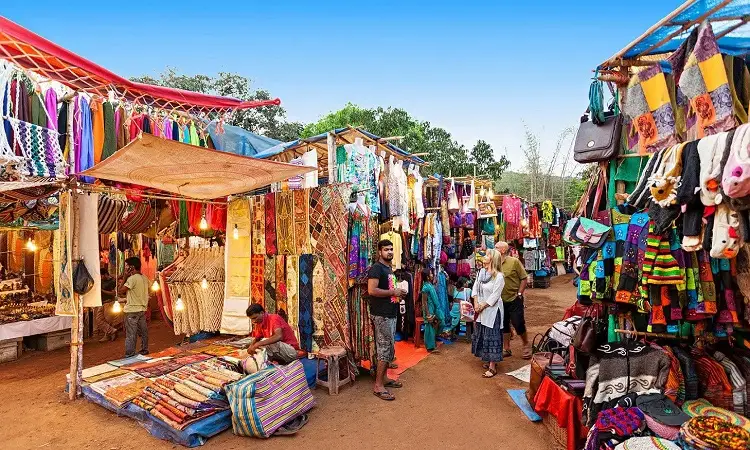
No visit to Anjuna is complete without spending a few hours at the Anjuna Flea Market — one of the oldest and most beloved markets in Goa. Held every Wednesday near the beach, this market started as a gathering of hippie travelers trading clothes and trinkets in the 1960s. Today it has grown into a full-scale open-air bazaar that draws thousands of visitors weekly.
What you will find here: handmade Kashmiri jewelry, Tibetan singing bowls, Gujarati handicrafts, mirrored skirts, Goan trance music CDs, Israeli street food, fresh fruits, pashmina shawls, colorful beachwear, and antiques. The crowd is as eclectic as the products — Tibetan vendors, Israeli cooks, Kashmiri craftsmen, and Goan grandmothers have been selling here for decades.
Tips: Bargaining is expected and part of the experience. Go in the morning before it gets crowded and hot. The market is located on the road leading to the beach, making it easy to combine with a beach day.
2. Water Sports at Anjuna Beach
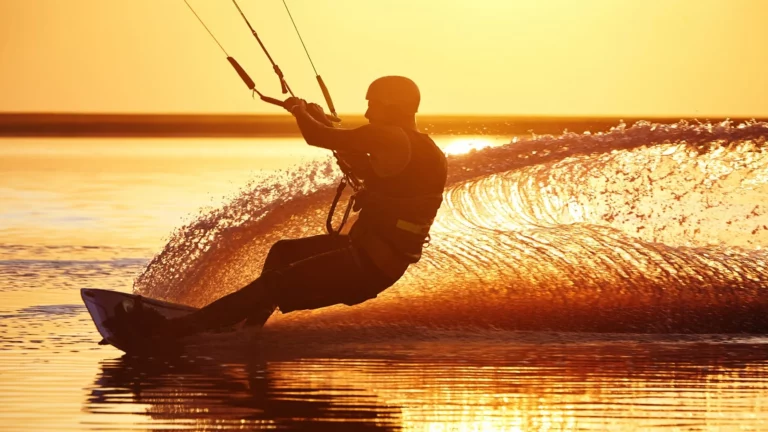
Anjuna Beach is one of North Goa's most popular spots for water sports, with activity zones set up along the shoreline from October through April. The rocky outcrops at certain points create natural boundaries that make sections of the beach well-suited for adventure activities
Tip: Water sports operators typically set up after 9 AM. Prices are negotiable, especially if you are booking multiple activities. Always check that life jackets are provided and operators are licensed.
3. Watch the Sunset from Anjuna's Rocky Cliffs
Unlike the flat, wide-open beaches of Baga or Calangute, Anjuna's coastline has a rugged, broken character — rocky outcrops jut into the sea, creating elevated vantage points perfect for watching the sun descend into the Arabian Sea.
The best sunset spots are on the northern and southern ends of the beach, where the rocks meet the water. Around 5:30 PM to 6:30 PM (November–February), the light turns gold and the horizon puts on a genuine show. These spots are also popular among photographers.
4. Explore Curlies and the Anjuna Beach Shack Scene
Curlies is arguably the most famous beach shack in Anjuna — a legendary open-air hangout on the southern end of the beach that has been a landmark for backpackers and long-stay travelers for decades. The shack serves food and drinks through the day and transitions into a full music venue by evening.
Other well-known shacks along the Anjuna stretch include Shiva Valley and Nyex Beach Club, each with its own crowd and character. The shack culture in Anjuna is more laid-back than party-heavy Baga — expect reggae and chill electronica rather than commercial Bollywood.
For food: Fresh catch seafood, fish curry rice, prawn masala, and classic Goan bebinca for dessert are the standards. Most shacks also serve continental and Israeli-influenced dishes, a reflection of Anjuna's international traveler community.
5. Attend a Full Moon Party or Trance Night
Anjuna's identity as a trance and party destination goes back to the 1970s and 80s, when it became the global hub for Goa Trance music — a genre born on these beaches. That energy never fully left.
Full moon parties happen around the full moon nights throughout the season (October–April), particularly during New Year's Eve and Christmas. HillTop is one of the most well-known venues for electronic music events, with UV neon paint, giant sound systems, and all-night dancing. Curlies and Shiva Valley also host regular beach parties.
6. Visit Chapora Fort
Located approximately 5 km from Anjuna Beach, Chapora Fort is a 17th-century Portuguese fort built on a hill above the Chapora River. While the fort itself is now mostly in ruins, the view from the top — overlooking Vagator Beach, the Chapora River, and the Arabian Sea — is one of the most photographed scenes in North Goa.
The fort became nationally famous after appearing in the Bollywood film Dil Chahta Hai (2001), and the corner where the three leads sat is still a popular photo spot. Entry is free and the climb is easy. Best visited at sunrise or sunset.
7. Day Trip to Ozran Beach (Little Vagator)
Between Anjuna and Vagator lies Ozran Beach, locally called Little Vagator. It is smaller, quieter, and more secluded than Anjuna — flanked by palm groves, rolling green hills, and rock formations. The beach has no water sports facilities, which keeps it calm.
The standout feature here is the Shiva's Face — a large stone carving of Lord Shiva's face carved directly into the cliff rocks on the beach. The Shiva Cafe above the beach serves Tibetan food and is a beloved chill-out spot. Ozran is the right beach if you want a few hours away from the activity and noise of Anjuna.
8. Explore St. Michael's Church, Anjuna
Dating back to 1595 CE, the Church of St. Michael the Archangel is one of the oldest Portuguese-era churches in Goa still in use. Located near the Anjuna crossroads, its whitewashed facade, ornate interiors, and statue of St. Michael at the front gate make it one of the more historically significant stops in the village.
The church architecture reflects the Baroque Portuguese colonial style that defines Goa's Christian heritage. Entry is free. Mass timings vary by day of the week.
9. Albuquerque Mansion — A Colonial Heritage Landmark
The Albuquerque Mansion (c. 1920) is a well-preserved example of Portuguese colonial residential architecture. The building features distinctive octagonal towers and elaborate stained-glass work on its balconies. Along with the Mascarenhas Mansion, it represents the layered colonial history of North Goa that is easy to walk past without realizing its significance.


Leave a Comment
Your email address will not be published. Required fields are marked *